Metallic vs Flake Epoxy: Choosing the Right Floor Finish
Metallic vs flake epoxy for Conroe, TX floors: cost, durability, UV exposure, and where each finish works best. Compare before you buy.
- metallic epoxy
- flake epoxy
- epoxy flooring conroe
Metallic vs flake epoxy, in short
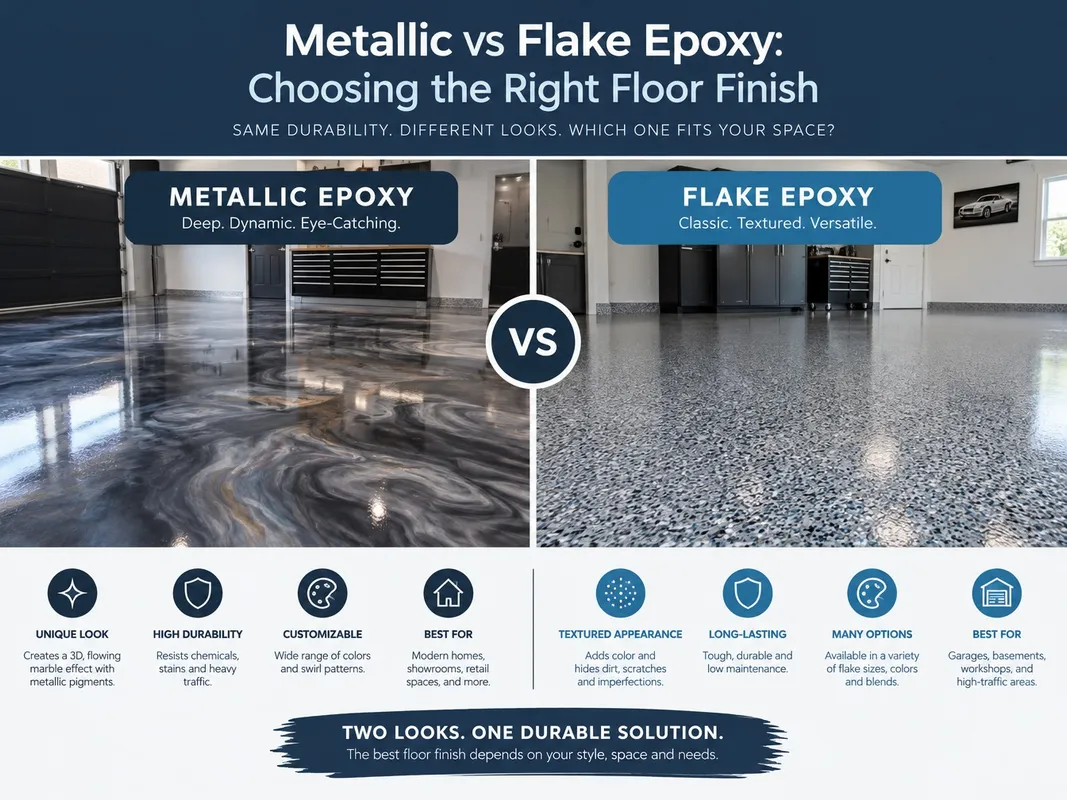
Flake epoxy is the practical choice: a speckled, textured, slip-resistant finish that hides dust, tire marks, and small slab imperfections, and costs less. Metallic epoxy is the dramatic choice: a swirled, marbled, high-gloss finish that looks like poured stone and shows everything. For a working Conroe garage, flake usually wins. For a showroom, a finished living space, or a statement garage where the floor is the point, metallic earns the extra cost and the extra maintenance. The decision comes down to how the space is used, not which product is better in the abstract.
How flake systems work
A flake system starts with a pigmented epoxy base coat, then vinyl flakes are broadcast across the wet resin until the floor will not accept more. When the base cures, the excess flake is scraped and vacuumed, and a clear topcoat locks everything in.
The flake does real work. It adds texture so the floor is not slick when wet, it hides the small flaws in every concrete slab, and it breaks up the appearance of dust and scuffs. Because the pattern is random and dense, it also makes future repairs easier to camouflage: a patch blends into the speckle far better than it would into a solid color. The standard system is described on our flake epoxy systems page.
Size, seams, and how metallic is installed
Metallic floors are often poured and worked in sections, because the installer has a limited working time before the resin sets. On a large floor or a room with walls and doorways, that can create subtle section lines where one pour meets the next. A skilled crew plans the pours to minimize them, but on bigger areas they are usually visible up close, and they are part of the character of a hand-worked metallic floor rather than a defect. Flake flooring is broadcast across the whole slab, so it reads as one continuous surface regardless of size.
How metallic systems work
Metallic epoxy uses a pigmented base coat, metallic pigment, and a technique that moves the pigment around while the resin is wet to create swirls, veins, and depth. There is no flake layer. The look comes from the pigment flow and the glossy finish.
That gloss is the point and also the problem. A high-gloss metallic floor reflects light and shows every bit of dust, every water spot, and every scuff. It is genuinely striking in the right room and genuinely fussy in the wrong one. It also demands more skill: a metallic pour cannot be patched invisibly, because the flow pattern is one of a kind. You can see examples and details on our metallic epoxy flooring page.
Side by side
| Flake epoxy | Metallic epoxy | |
|---|---|---|
| Look | Speckled, uniform, matte to satin | Swirled, marbled, high gloss |
| Hides dust and tire marks | Very well | Poorly |
| Slip resistance | High, from texture | Low unless an additive is used |
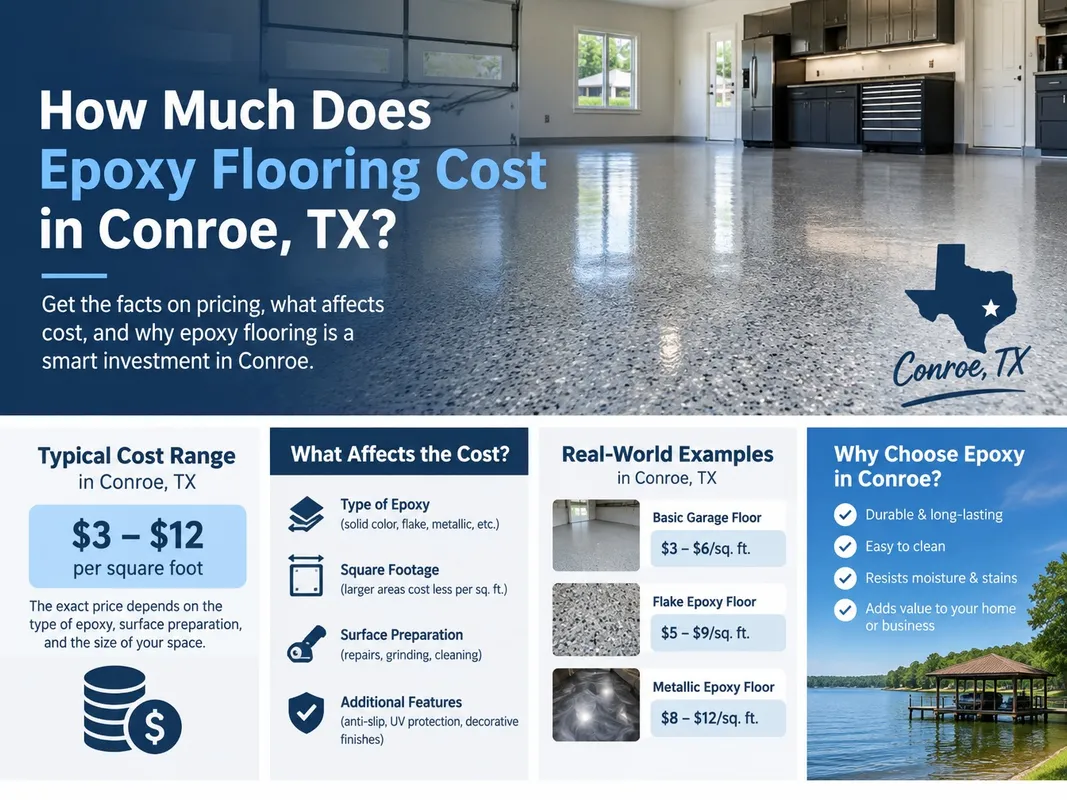
| Installed cost | Roughly $6–$9 per sq ft | Roughly $8–$14 per sq ft |
| Skill required | Moderate | High |
| Best rooms | Garages, shops, commercial | Showrooms, living spaces, feature floors |
| Repair and blending | Easy to camouflage | Very hard to match |
| UV exposure outdoors | Fine under a UV topcoat | Ambers badly without a UV topcoat |
What each costs in Conroe
For a typical two-car garage, a flake system generally runs about $6 to $9 per square foot installed, and a metallic floor generally runs about $8 to $14 per square foot, with the difference driven by material, labor intensity, and the prep needed to make a high-gloss surface look right. Metallic is unforgiving: because the finish is glossy and seamless, any waviness, crack, or patch in the slab shows through. That often means more prep work, which adds cost.
These are planning ranges rather than quotes, and the spread within each row is real. A simple flake floor on a sound slab sits at the low end. A metallic floor over a rough or cracked slab sits at the high end. For a fuller look at how we price floors, read our cost breakdown for Conroe.
Where each finish belongs
Flake belongs where the floor works for a living. Garages, workshops, gyms, rental units, utility rooms, and commercial spaces. It is forgiving, easy to maintain, and it makes a busy floor look intentional rather than messy. It is the default for garage floor coatings for good reason.
Metallic belongs where the floor is part of the decor. A finished garage that doubles as a showroom, a home bar or man cave, a retail space, or a lobby. It is a design feature, and it should be chosen by someone who enjoys it and is willing to maintain it. If the space is a working shop, flake is the honest recommendation.
Lighting changes everything
Metallic floors live and die by light. In a room with good natural light or layered lighting, the swirls and depth come alive. In a dim garage with a single bare bulb, the same floor can look flat and dark, and the gloss shows whatever light does hit it as glare. Flake, by contrast, looks consistent in almost any lighting because the pattern carries the finish. If you are considering metallic, look at the space at different times of day before committing.
Southeast Texas considerations
Three local factors matter when you choose between these finishes.
UV exposure. Metallic resin and its clear coat can amber under direct sun unless a UV-stable topcoat is used, and even then a sun-blasted garage apron is a hard place for a high-gloss floor. For outdoor or sun-exposed surfaces, look at patio and outdoor coatings rather than a standard metallic interior floor.
Heat and hot-tire pickup. A glossy metallic floor under a hot tire in July faces the same heat problem as any coating. The fix is the same: proper prep and a polyaspartic topcoat. Flake floors handle hot tires well because the texture and flake reinforce the film and hide any minor marking.
Humidity and moisture. Neither finish tolerates a wet slab. A high-gloss metallic floor makes moisture blisters especially visible, because any lift in the film catches the light. That is another reason concrete prep and repair comes first, no matter which look you pick.
Maintenance and repair
Flake is low-maintenance. Sweep or blow it out, damp-mop when needed, and it hides the wear of daily use. Repairs are straightforward because the speckled pattern disguises a patch.
Metallic needs more care. Dust shows, water spots show, and the gloss magnifies everything. Repairs are the hard part: matching a unique flow pattern is essentially impossible, so a damaged metallic floor usually means recoating a larger area or the whole floor to keep it looking consistent. If a floor is going to take real abuse, that is a strong argument for flake.
How long each takes to install
Flake is the faster system. A typical two-car garage is usually a one- to two-day job, with the flake broadcast on the first day and the topcoat applied after the flake is scraped and vacuumed. Metallic takes longer, because the pigment work is slow and deliberate and each section has to be worked within its open time. It is more of a custom process, and the schedule reflects that. Either way, cure time before you park on the floor is part of the plan, not an afterthought.
Which should you choose?
- Working garage, shop, or rental: flake.
- Showroom, finished man cave, or retail feature floor: metallic.
- Budget is the deciding factor: flake costs less and holds up longer under hard use.
- The slab is rough, cracked, or damp: fix the slab first. For metallic, plan on more prep.
- Outdoors or in direct sun: neither is ideal without a UV-stable system. See patio and outdoor coatings.
If you are still weighing the base chemistry as well as the look, epoxy vs. polyaspartic flooring explains how the resins differ and why most floors combine them.
Picking the finish with a professional
The two looks are easy to describe and hard to judge from a phone screen. On an estimate, we bring samples so you can see how flake and metallic actually read in your space and your lighting, and we will tell you which one suits the way you use the floor. If the answer is that a cheaper flake floor serves you better, that is the answer we will give. You can see the full range on our services overview or learn more about our approach.
Ready to see samples in person? Request a free estimate or call Conroe Epoxy at (346) 220-3416, and we will help you choose the finish that fits.